Designing a Motherhood Attitude for Embroidery
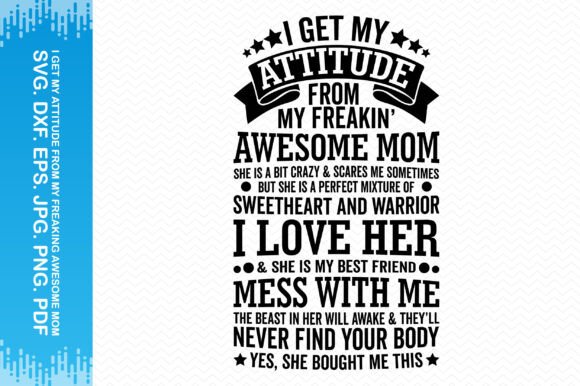
When a design like I Get My Attitude from My Mom Clipart lands in my queue, I approach it as a project blueprint, not just a graphic. The title alone sets the mood: it’s playful, proud, and packed with personality. This isn’t a generic floral motif; it’s a statement. As an embroidery designer, my first task is to visualize how that statement will translate into stitches, thread, and fabric.
The Immediate Impression: Bold and Relatable
The layout and theme of this design scream for a medium that can carry its confidence. It feels celebratory. The phrase “freaking awesome” suggests a modern, slightly cheeky vibe that resonates with a specific audience—think moms who appreciate humor and kids (or adults) who want to wear their pride. For an embroidery project, this means the design needs a canvas that matches its energy. I immediately picture it on a relaxed-fit sweatshirt, a sturdy canvas tote bag, or even a well-loved apron. It’s a design that belongs on something used and seen.
Where This Design Finds Its Home
In practical use, this clipart is a versatile starting point. I’ve run through a few real scenarios in my head. A client requests a custom gift for a mother’s birthday: an embroidered pillow cover for her reading nook. Another wants a line of small shop products for her Etsy store focusing on motherhood—think tea towels and simple baby onesies with a cool, modern message. The design’s personality makes it a strong candidate for personalized gifts and craft business merchandise.
Its suitability extends to:
- Custom apparel: Sweatshirts, t-shirts, and caps where the text is clear and central.
- Home goods: Pillow covers, kitchen towels, and lightweight blankets.
- Boutique branding: As a recurring motif on a line of handmade products.
- Embroidered patches: Which can be applied to bags, jackets, or nursery decor.
The key here is that the product should feel authentic to the message. It wouldn’t suit a overly formal item, but it would shine on something with a personal touch.
Navigating the Stitching Terrain
Moving from concept to hoop, practical considerations take over. The provided formats, including SVG, are crucial. For machine embroidery, the SVG file can be converted and adjusted, but the original detail level is paramount. The design’s success hinges on stitch clarity, especially for the lettering. “Freaking Awesome” needs to be legible after stitching. On a dark fabric like navy or black, high-contrast thread colors are essential. On a light fabric, you might play with brighter, more vibrant threads to amplify the attitude.
Fabric choice directly impacts the final product. This design, with its likely reliance on satin stitch for text and perhaps fill stitch for decorative elements, requires a stable base. On stretchy fabrics like t-shirts, a good stabilizer is non-negotiable to prevent puckering. On textured fabrics like a sweater, the stitches need to be dense enough to sit cleanly on the surface. For a curved surface like a cap, the design’s scale must be adjusted to fit the smaller, curved hoop size without distorting the crucial text.
Caution Zones for this Embroidery File
Not every application is ideal. Here’s where I’d proceed with care:
- Very small hoop sizes: If the text shrinks too much, the detail in “freaking awesome” could become muddy and lose its punch.
- Thin or delicate fabrics: The required stitch density might be too heavy for fine linens without proper stabilizer backing.
- Items requiring frequent washing: On things like baby clothes or kitchen towels, ensure the stitch structure is robust and thread quality is high to maintain longevity.
- Densely detailed corners: In conversion to an embroidery file, small decorative accents might need simplification to stitch cleanly.
This isn’t a limitation of the design itself, but a reminder that every graphic needs a thoughtful translation into the physical world of embroidery.
The Value Beyond the Stitches
Using a design like this in a finished product affects more than aesthetics. It influences customer trust and buyer engagement. A well-embroidered version on a tote bag feels professional and giftable. It tells a story, which enhances its value as a handmade product. For an Etsy seller or creative entrepreneur, this design can become a part of brand consistency—a recognizable, mood-defining element across a product line.
It also raises a practical note for commercial use. The description mentions multiple formats, which is excellent for flexibility. However, before selling finished items or using the design in digital product previews and printable mockups, one must confirm the licensing terms. Is it for personal use only, or does it allow for commercial embroidery projects? This step is fundamental for any serious maker or small business owner.
A Designer’s Pre-Stitch Checklist
Before I’d commit this to a client’s sweatshirt or my own shop’s apron, here’s my routine:
- Test the converted embroidery file on scrap fabric of the same type and weight I plan to use.
- Check thread color contrast against both light and dark fabric backgrounds.
- Review the stitch density in the file preview to ensure it’s appropriate for my target fabric.
- Inspect how small details, especially in the text, render in the stitch path.
- Confirm the physical hoop size needed and that my machine can handle it.
- Use proper stabilizer and hoop it securely to avoid any shift during stitching.
These steps transform a digital graphics asset into a reliable, high-quality embroidery project. They separate a hobby experiment from a professional crafts outcome.
The Final Verdict for Real-World Use
I Get My Attitude from My Mom Clipart is a design with a clear voice. For embroidery designers and makers, it’s a promising starting point for projects that celebrate a modern, affectionate, and slightly sassy motherhood vibe. Its real-world performance depends entirely on that translation process—from digital clipart to physical stitches. By minding the fabric, the scale, the stitch clarity, and the licensing, this design can become a standout element on custom apparel, heartfelt gifts, and successful small business merchandise. It’s not just a file in a ZIP folder; it’s a potential centerpiece for a product that someone will love, wear, and use, which is always the goal.