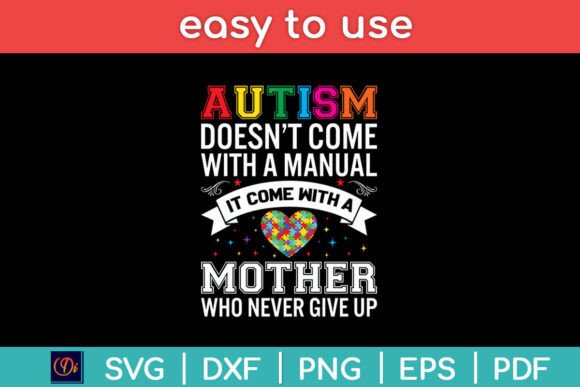
A Designer's Take on the Autism Doesn't Come with a Manual Embroidery File
The Immediate Impact: More Than Just Words on Fabric
When I first look at a design like Autism Doesn't Come with a Manual, my instinct is to visualize it stitched out, not just as a flat graphic. This phrase carries significant emotional weight, and the embroidery needs to honor that. It’s not a whimsical slogan; it’s a statement of experience, resilience, and love. The design’s personality feels direct, heartfelt, and grounded. This isn't about intricate decorative flourishes; the power comes from the message itself. It naturally belongs to projects meant for connection—gifts, keepsakes, and apparel that speak directly to a community or an individual’s journey.
Where This Design Finds Its True Home
I’m picturing a custom embroidered tote bag for a mother, something durable and used daily, or a softly stitched baby blanket or sweatshirt that becomes a cherished item. The design translates beautifully into a embroidered patch, allowing for versatility on jackets or backpacks. For a craft business or Etsy seller, this could be a core product for personalized gifts, especially around Mother's Day or awareness events. It has a strong giftability factor for holidays, but its relevance isn't seasonal—it's timeless for those touched by autism.
Considering the Commercial and Personal Landscape
For small shop owners and apparel decorators, offering this on a range of products—from pillow covers to aprons—can build trust with a specific audience. The design’s clarity and straightforward theme support brand consistency for boutiques focusing on meaningful messages. In a real-life scenario, preparing a set of embroidered tea towels and caps for a craft fair, I’d expect this design to engage customers looking for something that resonates personally, not just decoratively.
Practical Performance in the Hoop
Moving from concept to machine, the practical performance of Autism Doesn't Come with a Manual is key. As an embroidery file, its success hinges on legibility and stitch integrity.
Scenarios for Success and Caution
On medium-weight fabrics like cotton tote bags or sweatshirts, with a good stabilizer, this design should stitch out with clean stitch clarity. The value of the finished product increases when the lettering is sharp and professional. However, caution is needed in several areas. If the design includes very tiny lettering, it might get lost on textured fabrics like some blanket materials. On dark fabric, thread color contrast is absolutely critical—a white or bright satin stitch might be necessary. Stitch density should be evaluated; overly dense areas on thin fabric like a baby shirt could cause puckering. For curved surfaces like caps, the layout needs to be adaptable, and small details might need simplification.
Designer Notes for a Smooth Project
- Always test the design on scrap fabric first, mimicking the final project’s material.
- Check how it looks in both black and white mockups to gauge its impact on light and dark backgrounds.
- Use the proper hoop size to ensure the entire design is secured without distortion.
- Inspect any small details or corners in the design file before running the final embroidery project.
- Confirm the licensing terms for this digital product—can it be used for commercial embroidery and finished products you sell? Never assume.
The Final Stitch: Appeal, Trust, and Professionalism
When executed well, an embroidered item featuring Autism Doesn't Come with a Manual elevates its visual appeal through craftsmanship. It shows that the maker cared about the execution, which builds customer trust. For a handmade product, this attention to detail in the stitching—clean satin stitches, no loose threads—enhances the presentation and perceived value. It feels like a considered, professional piece rather than a generic appliqué. This matters immensely for creative entrepreneurs selling at craft fairs or online.
Ultimately, this design file falls into the crafts and graphics category, but its real worth is as a design asset for creating something with emotional resonance. Its strength isn't in visual complexity, but in its authentic message. As a designer reviewing it for real use, I see it as a robust choice for focused projects where the story behind the stitch is the most important feature. It reminds us that sometimes, the simplest designs, rendered with care and skill, carry the greatest weight.